
Barry Passes the BON Baton to Dr. Jeff Reese
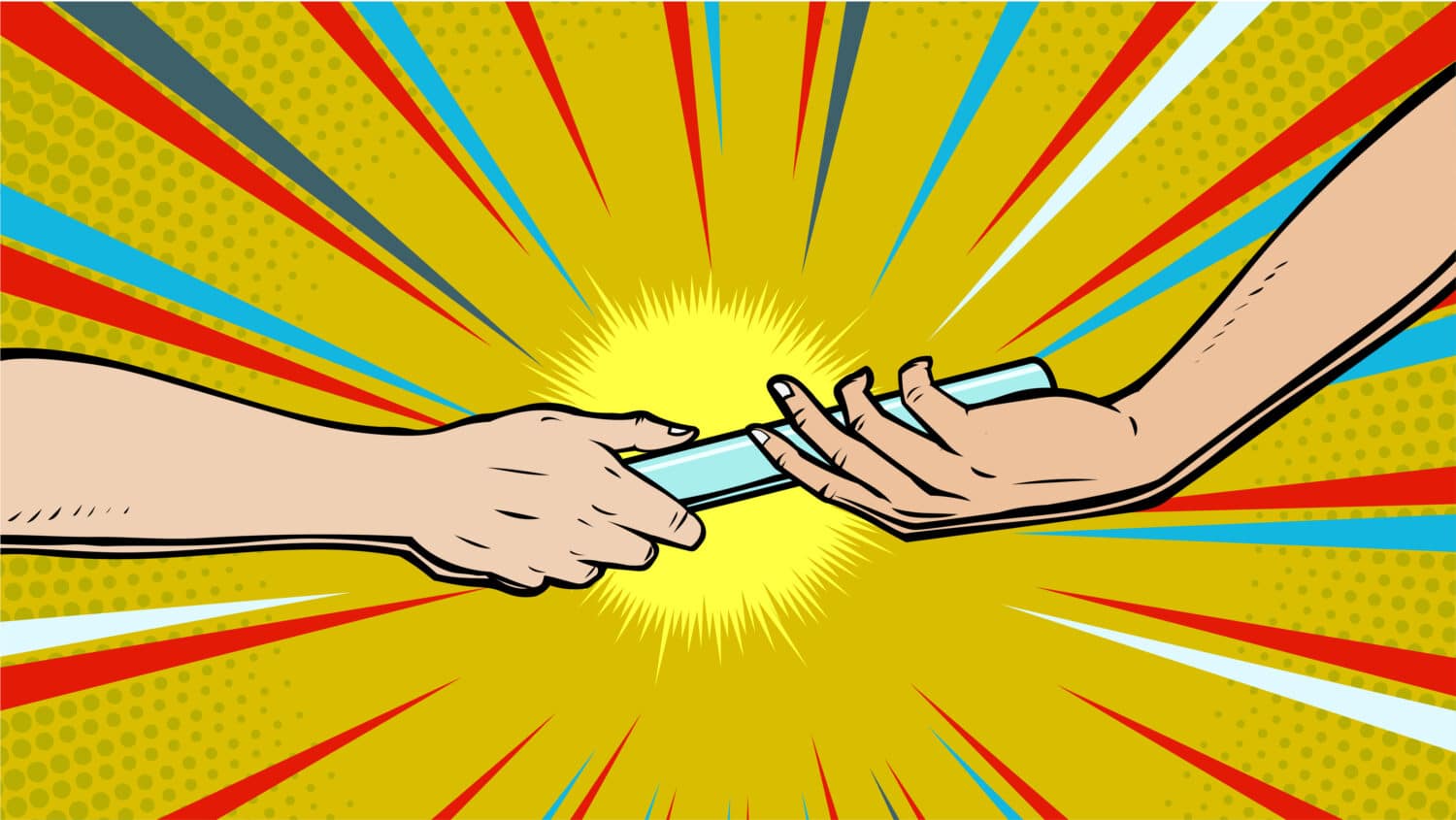
I am retiring. After devoting the last forty years to client privilege, the common factors, and measurement-based care, I did not want my life’s work to devolve into a corporate, equity-funded business devoid of both passion and science. Although I will remain connected, I am more than pleased to pass the baton to someone with client-first values and a genuine ambition to improve outcomes. I am delighted to introduce you to Dr. Jeff Reese. Jeff has been a trusted colleague and a part of Better Outcomes Now (BON) since its inception, serving as Director of Research and has been an authentic enthusiast of the Partners for Change Outcome Management System (PCOMS) since the beginning. We have researched PCOMS, both separately and together, accounting for eight randomized clinical trials (RCT) and three landmark benchmarking studies in public behavioral health. We have been in the weeds of the science of PCOMS and have unequivocally demonstrated that PCOMS improves behavioral health outcomes across client populations and clinical settings. Our latest collaboration articulates the contributions of PCOMS to collaborative practice and cultural responsiveness.
Dr. Jeff Reese
Here is a little more about Jeff Reese, Ph.D. Dr. Reese is a counseling psychologist who earned his PhD from Texas A&M University. He has had a distinguished 26-year academic career at institutions including Abilene Christian University, the University of Kentucky, Auburn University, and the University of Nebraska–Lincoln. In addition, he has more than 16 years of administrative experience, most recently serving as Dean and endowed professor in the College of Education and Human Sciences at the University of Nebraska–Lincoln. Dr. Reese has authored over 70 peer-reviewed publications and book chapters and is a co-author of The Skilled Helper, a widely used counseling text translated into multiple languages. Jeff is also a Fellow of the American Psychological Association.
Jeff will continue the values-based work of BON and has great plans to expand its reach. I couldn’t have asked for a better choice to take the baton.
Thanks for the Memories
It has been a long, strange trip indeed. In addition to my clients who shaped me into the therapist that I am, I owe an incalculable debt to a long list of friends and colleagues, too many to mention, so I will only highlight a few. Speaking of a strange trip, I’d be remiss if I didn’t mention Oprah. I validated the expression, “deer in the headlights” with my appearance on her show.
The term “client directed” and the resulting books, Changing the Rules: A Client Directed Approach and Psychotherapy with “Impossible” Cases emerged from my early days and one-way mirror work at the Dayton Institute for Family Therapy. A special thanks to Greg Rusk, the best therapist I ever saw work, for teaching me so much about therapy. I continued my deep dive into the common factors at the Institute for Study of Therapeutic Change which culminated in perhaps the most widely read book about the common factors,The Heart and Soul of Change, and the collaborative development of the Outcome Rating Scale and Session Rating Scale. Thanks to Scott Miller for the measure collaboration, which led to something quite significant to psychotherapy. After two years of ORS/SRS use in my practice and supervision, I developed the collaborative clinical process to accompany the ORS/SRS and called it “PCOMS.” This process was first articulated in the 2002 book Heroic Clients, Heroic Agencies: Partners for Change, now in its fourth edition, written with my best friend and co-conspirator, the late Jacqueline Sparks. Long before the RCTs, we asserted PCOMS as a way to privilege individual experience and promote “socially just practice.”
The RCTs and More Thanks
After psychometric validation of the measures, it was on to proving that PCOMS made a difference via our first RCT in Norway (2009), thanks to the inimitable Morten Anker—with much gratitude to Anne-Grethe Tuseth who brought me to Norway early on and who inspired many Norwegians toward PCOMS with her writing, teaching, and supervision. Skipping forward to our most recent RCT (2021) conducted in three integrated care sites, the first to examine measurement-based care in that setting—made possible by my longtime (since graduate school) friend, Brian DeSantis. Better Outcomes Now could not have happened without Bill Wiggin, the under-the-hood IT genius who started with me in 2013 to make PCOMS, its spirit and intent, digitally come to life. BON could not have existed without Barbara Hernandez, whose support, expertise, and good judgment sustained me in good and bad times. My journey was not possible without these folks, who selfless actions to explore and promote PCOMS was fueled by both their passion for client voice and support of a friend. And finally, thanks so much to my dear friend and fellow Allman Brothers Band nut job, John Murphy, for providing the most fun I’ve ever had writing a book…twice (Brief Interventions for School Problems (1997, 2007).
Check out this conversation with the Mental Care Network that discussed some of the above history.
While you’re at it, check out all the articles, chapters, and videos available on the Archive page.
Finally (and I really mean it this time), thanks to all of you who supported my work from “client directed” to the common factors, to PCOMS.