

Culturally Responsive, Socially Just Practice: Now More than Ever
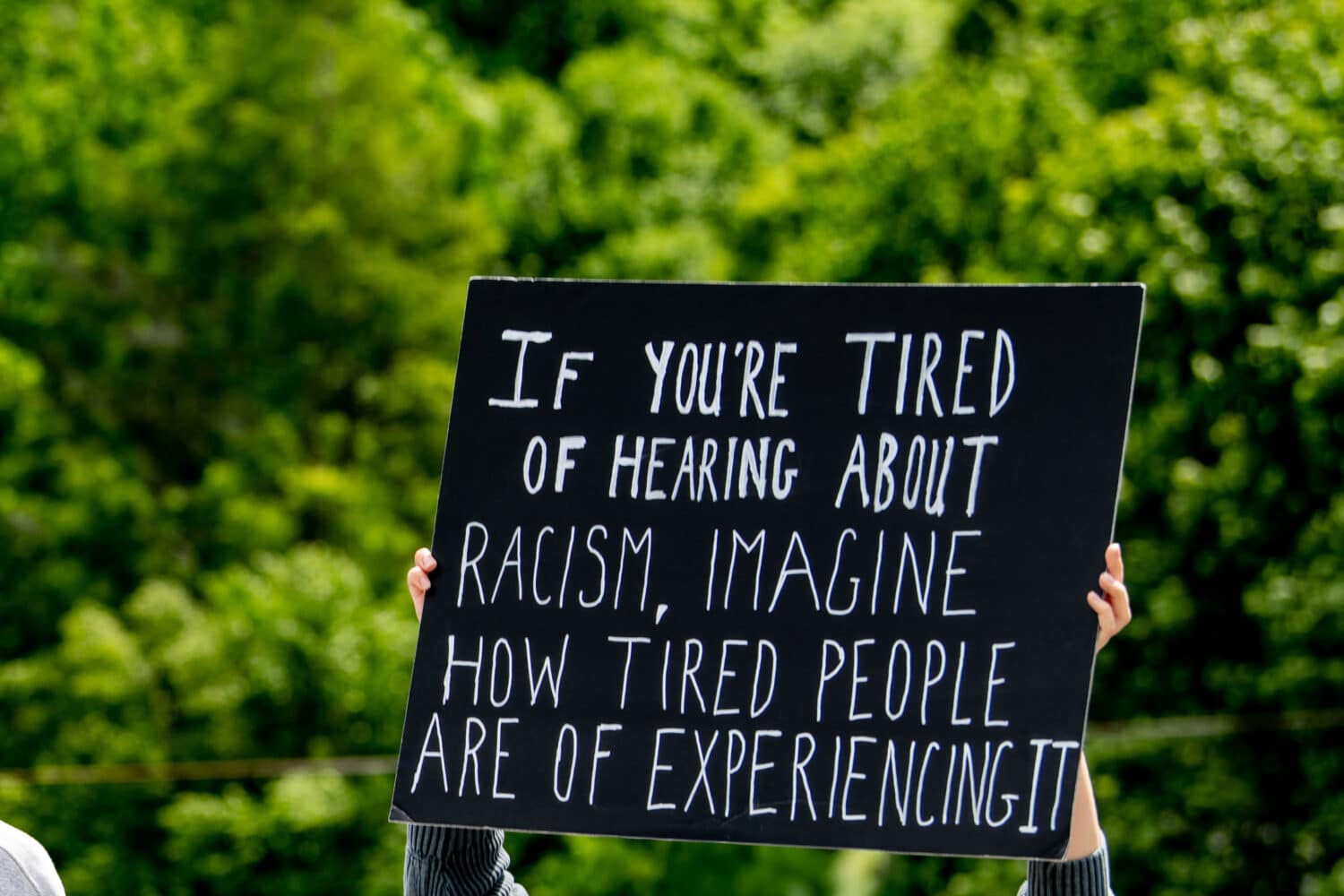
As directly evidenced by the ongoing destruction of DEI policies and the recent Supreme Court ruling, racism is alive and well. These developments should only increase our attention to social justice and cultural responsiveness.
My Journey to Social Justice
My passion for social justice in psychotherapy evolved from both my personal and clinical experiences. My parents, Appalachian folks who escaped abject poverty by traveling north to find factory jobs, created the context for an earlycombustible anger about class. While class was always front and center as I witnessed with contempt those who drove new cars to my high school and bragged about their Aspen ski vacations and ivy league admissions, it took me a while to acknowledge my white privilege. I thought poor is poor regardless of skin color. I witnessed poverty a plenty in the hills of Kentucky, people dirt poor living in shacks without indoor plumbing, wearing rags, and looking like starving people from third world countries. But I was wrong and the major events of the late sixties, namely the Vietnam War and the Civil Rights movement, brought it all to light–government corruption, the slaughter of the innocent, and institutional racism. Thank you Dr. Martin Luther King. Once you see it, you can never unsee it.
Once you see it, you can never unsee it.
By the time I was a senior in high school, the Kent State massacre of 1970 whipped up my simmering class antipathy and antiwar sentiments into a full-boiled rage, and off to the University of Cincinnati I went, where I majored in the three p’s: protest, psychedelics, and polydrug abuse. After a kamikaze academic nosedive, three arrests (including during the massive 1971 antiwar protest in DC), and a nearly lethal overdose, I returned home and started work in a tire factory, which probably saved my life. I left the factory eight years later, finished my undergraduate degree and was accepted in a psychology doctoral program.
To my disappointment, I found that the same forces that oppress the poor and disenfranchise historically marginalized groups held true in psychotherapy, often justified by attributions of psychopathology with treatment success judged by experts enamored of theories of dead white men. Adding insult to injury, clients were often maligned as broken, scarred, incomplete, or sick, walking talking embodiments of the DSM. When services are provided without intimate connection to those receiving them and to their responses and preferences, clients become cardboard cutouts, the object of professional deliberations and subject to theoretical whims and cultural stereotypes.
I learned that clients, as a matter of course, do not have much of a voice in psychotherapy.
This was the inspiration for my passion for privileging client perspectives about their own care, what we called “client directed” therapy in my first book, Changing the Rules, and being far more humble than traditional professional discourse about my own impressions. We advocated for a more proactive honoring of client views about the reasons for service, theory of change, as well as what constitutes success to maximize common factor effects and enhance client collaboration.Valuing clients as credible sources of their own experiences is a necessary precursor to cultural responsiveness and social justice, enabling therapists to critically examine assumptions and practices and allow clients to teach clinicians about cultural differences and how to be most effective with them.
Later in the middle to late nineties. I was inspired by pioneer Michale Lambert’s idea of using outcome measures to prevent treatment failure. More than that, I saw it as truly revolutionary—client perceptions of the usefulness of therapy could “direct” the therapeutic process and provide a way to operationalize client privilege and voice. But Lambert’s measures were too unwieldy for everyday practice, which led to our development of much briefer measures. I experimented with them in both my private practice as well as with graduate students I supervised in a free multicultural south Florida clinic. Ultimately, after two years, I developed the clinical process of the Partners for Change Outcome Management System (PCOMS) and put it in print in the first PCOMS manual with my then student and future collaborator extraordinaire, Jacqueline Sparks. We asserted PCOMS as a way to embrace individual experience and promote “socially just practice” (Duncan & Sparks, 2002).
Routinely requesting, documenting, and responding to client feedback transforms power relations by privileging client beliefs and goals over potentially culturally biased and insensitive practices. PCOMS promotes socially just practice by privileging consumer voice over manuals and theories enabling idiosyncratic and culturally responsive practice.
The ORS empowers clients to highlight their views of distress/well-being, refocusing therapy toward individualized problem construction and solution building and away from options based on diagnosis, symptomology, or normative functioning.
PCOMS includes two four-item scales, the Outcome Rating Scale (ORS), which measures client benefit, and the Session Rating Scale (SRS), which monitors the therapeutic alliance. Unlike other outcome measures, the ORS is not a list of symptoms or problems checked by clients on a forced-choice, Likert scale. Rather, it is a visual analogue instrument that is individualized with clients to represent their distress and the reasons for service on four domains (personal, interpersonal, social, overall). The major domains of life depicted on the ORS offer only a framework of life, a skeleton of human experience to which clients add the flesh and blood of their lived experience via the therapeutic conversation.The ORS helps contextualize a client’s presenting problem beyond diagnostic categories, running counter to practices that pathologize clients of color and other historically marginalized groups at higher rates. Putting client reasons for service in context can also promote consciousness raising for both client and therapist, helping to identify forms of oppression and marginalization that may contribute to distress. Its brevity encourages a real-time scoring and discussion of client goals, as well as immediate feedback on treatment progress. The visual analog continua and lack of specific content questions allow a broad range of flexibility for the client to communicate their unique experience. The ORS provides the starting point for the conversation that unfolds the client’s unique story, views, and preferences.
The Unspoken Side of Symptom Scales
There is nothing wrong with symptom scales when clients present their reasons for service as a result of experiences of depression and anxiety, the two diagnoses easiest to sell to the public and capable of reducing all the stressors in life (poverty, lack of access to a good paying job, high debt, the pandemic, discrimination, troubled relationships, the state of politics, climate change, war, social unrest and violence, to mention a few) to just two categories with available treatments just a prescription away. And it is far more convenient to put the onus on individual “pathology” than to address the social causes of distress like income inequality or racism.
It’s easy, perhaps too easy, to identify symptoms on popular, pharmaceutical sponsored check lists, to reduce human suffering to two highly publicized conditions that readily translate to medication intervention. But to contextualize symptoms and their idiosyncratic meanings for psychotherapeutic intervention requires a more individualized and nuanced clinical process. Thanks goodness!
Like the ORS provides the space and opportunity to discuss client benefit and collaborative decisions to alter therapy, the SRS enables a structure for conversations about the relationship and alliance—to demonstrate a sincere curiosity and desire to understand the client’s experience, especially those whose experiences are different than the therapist’s social location. Given there is no such thing as an expert in the diversity of the human condition, the SRS enables the space to make humble attempts at getting closer to the client’s unique experience and desires for psychotherapy.
As directly evidenced by the ongoing destruction of DEI policies and the recent Supreme Court ruling, racism is alive and well. These developments should only increase our attention to social justice and cultural responsiveness.
PCOMS provides a pathway to cultural responsiveness, but it is not a panacea for addressing diversity or social inequality. Rather, I hope to demonstrate that PCOMS could provide a structure for the good intentions of the field and us, individually as therapists—a conscientious attempt to acknowledge and address marginalization and privilege in therapy. Attention to social justice and cultural responsiveness takes a sustained effort to include clients and embrace their feedback—to not reduce psychotherapy to the medical model equation of diagnosis plus prescriptive treatment equals cure, nor clients to cultural, ethnic, racial, or gender stereotypes or pharmaceutical sponsored checklists, nor the proclivities of enlightened psychotherapists who know better than clients what they need.
Read more:
Duncan & Reese (2024; scholarly article)